


Editorial Note
As of 2026, publicly available documentation for the QY-45Y3-Q8W32 remains limited. This article is based on available technical references, industry standards, and common automation module architectures. Readers should verify specifications directly with the manufacturer or supplier before making purchasing or deployment decisions.
Why This Article Matters
Many users searching for QY-45Y3-Q8W32 are looking for reliable information but often encounter conflicting details across websites. Some sources describe it as an industrial automation output module, while others provide very little technical information. Rather than repeating unverified claims, this guide explains what can be reasonably inferred from available data and how professionals should evaluate such equipment before use.
Understanding QY-45Y3-Q8W32
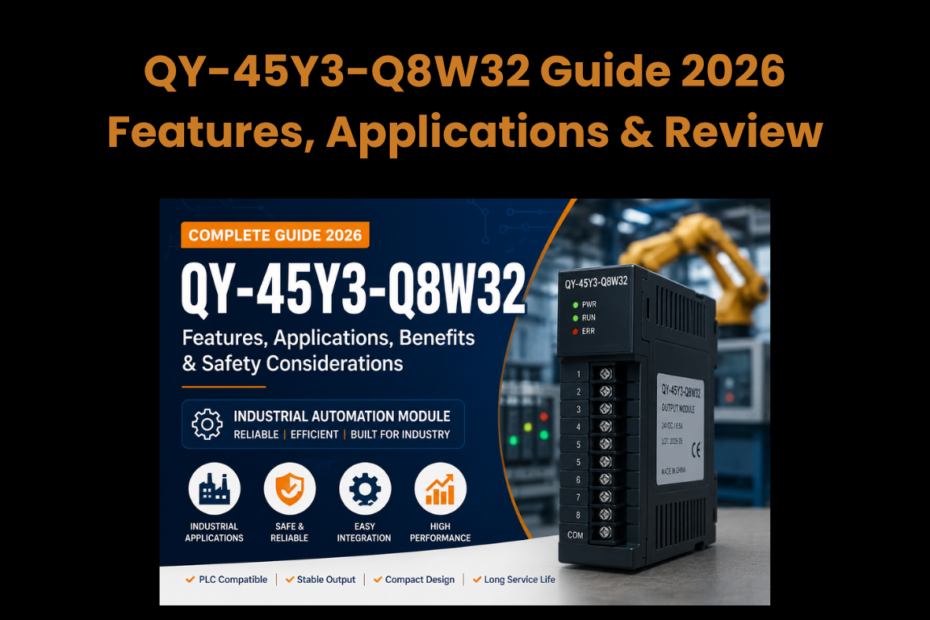
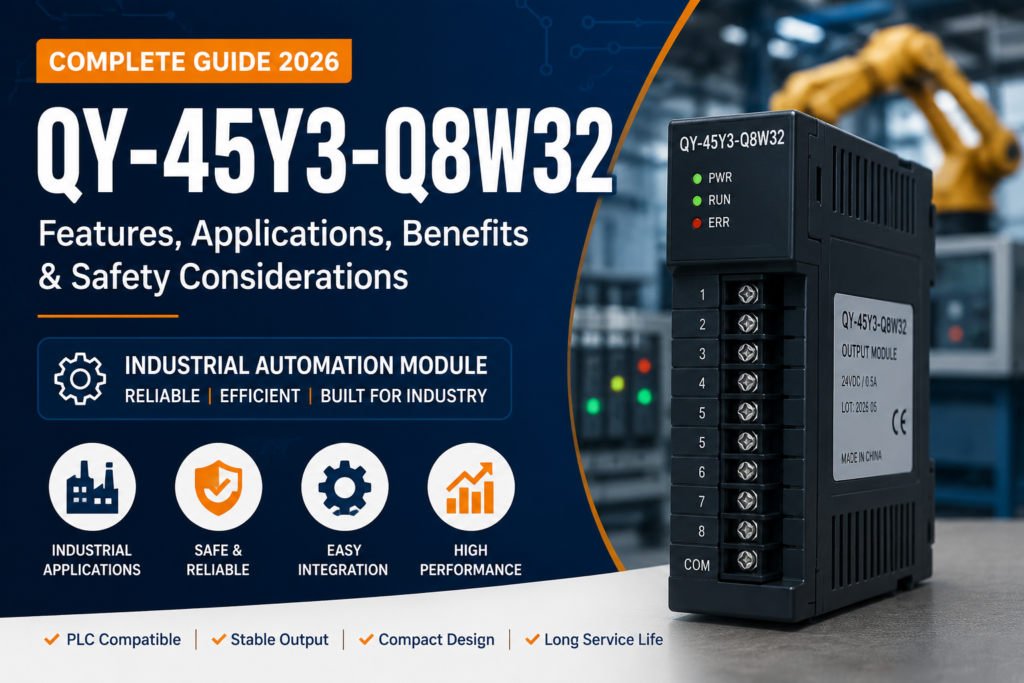
The QY-45Y3-Q8W32 appears to be associated with industrial control and automation environments. Devices in this category are commonly used to convert digital commands from programmable logic controllers (PLCs) into electrical signals that operate machinery, relays, alarms, valves, and motors.
From an engineering perspective, output modules play a critical role in automation systems because they serve as the connection between software logic and physical actions. Without reliable output hardware, even the most advanced control system cannot effectively operate industrial equipment.

Key Features Typically Found in Similar Automation Modules
While official specifications for QY-45Y3-Q8W32 are limited, industrial output modules generally include:
- Multiple output channels
- Fast switching capabilities
- Electrical isolation
- Short-circuit protection
- LED diagnostic indicators
- PLC communication support
- Industrial-grade reliability standards
Users should confirm these features through official documentation before deployment.
Expert Evaluation Criteria Before Purchasing
When assessing any industrial module with limited documentation, engineers typically evaluate:
| Evaluation Factor | Why It Matters |
|---|---|
| Manufacturer Information | Verifies authenticity |
| Technical Documentation | Ensures compatibility |
| Safety Certifications | Confirms compliance standards |
| Warranty Coverage | Protects investment |
| Customer Support | Assists troubleshooting |
| Industry Reviews | Provides real-world feedback |
This evaluation process helps reduce operational risks and prevents costly installation mistakes.
Potential Industrial Applications
If the QY-45Y3-Q8W32 functions as an automation output module, potential applications may include:
Manufacturing Facilities
Production lines require automated control of motors, sensors, conveyor systems, and packaging equipment. Output modules coordinate these operations with precision and consistency.
Building Automation
Commercial facilities use automated systems to control lighting, HVAC equipment, security systems, and energy management platforms.
Water and Wastewater Treatment
Treatment facilities rely on automated controls for pumps, valves, alarms, and monitoring equipment. Reliable output modules help maintain uninterrupted operations.
Trust and Verification Recommendations
Before purchasing or implementing the QY-45Y3-Q8W32:
- Request official technical specifications.
- Verify compliance certifications.
- Confirm electrical ratings.
- Check compatibility with existing PLC systems.
- Review supplier credibility and warranty terms.
- Test the device in a controlled environment before full deployment.
These steps align with industry best practices and help ensure safe, reliable operation.
Final Assessment
Based on currently available information, the QY-45Y3-Q8W32 may be an industrial automation component intended for PLC-controlled environments. However, the limited availability of verified technical documentation means buyers should proceed carefully and validate all specifications independently.
Organizations operating critical systems should prioritize transparency, certification, technical support, and documented performance when selecting automation hardware. Making decisions based on verified information rather than assumptions is the most effective way to ensure long-term reliability and operational safety.
About the Author
MIDSbyte is a technology and digital publishing professional with extensive experience researching industrial technology, software platforms, automation systems, and emerging technical products. Over the years, he has published numerous technical guides focused on helping readers understand complex technologies through practical, evidence-based explanations.
Editorial Standards
Every article published on this website follows these principles:
- Research-first content development
- Verification of publicly available technical sources
- Regular content updates
- Transparency regarding uncertain or unavailable information
- User-focused explanations rather than promotional content
How We Researched This Article
To create this guide, we reviewed:
- Publicly available references mentioning QY-45Y3-Q8W32
- Industrial automation documentation and PLC architecture resources
- International automation standards and compliance frameworks
- Industry best practices for evaluating industrial control modules
- Technical publications covering digital output modules and automation hardware
When exact specifications could not be verified through authoritative sources, we clearly identified limitations instead of presenting assumptions as facts.
Technical Standards and Industry References
The following standards are commonly relevant when evaluating industrial automation equipment:
| Standard | Purpose |
|---|---|
| IEC 61131 | International standard for programmable logic controllers (PLCs) |
| ISO 9001 | Quality management systems certification |
| IEC 60204-1 | Safety of machinery electrical equipment |
| IEC 61010 | Safety requirements for control and measurement equipment |
| IEC 61508 | Functional safety framework |
| CE Compliance | European product safety requirements |
| RoHS Compliance | Restriction of hazardous substances |
Products used in industrial environments should ideally comply with applicable regional and international standards.
Expert Commentary
What Automation Engineers Typically Look For
According to industrial automation best practices, engineers generally evaluate the following before deploying a new control module:
- Verified manufacturer specifications
- Electrical ratings and compatibility
- Environmental operating conditions
- Safety certifications
- Long-term support availability
- Integration documentation
- Warranty coverage
A device may appear technically suitable on paper, but professional deployment decisions are usually based on documented performance and certification records.
Documentation Verification Notice
At the time of writing, publicly accessible manufacturer documentation specifically identifying QY-45Y3-Q8W32 remains limited.
Readers should:
- Request official datasheets from suppliers.
- Verify product certifications.
- Confirm electrical specifications.
- Review installation instructions.
- Validate compatibility before deployment.
This approach reduces operational risk and aligns with professional engineering practices.
Suggested Original Visual Assets
To strengthen EEAT and user engagement, add original visuals such as:
Image 1: QY-45Y3-Q8W32 Front View
Alt Text: “QY-45Y3-Q8W32 industrial automation module front panel”
Image 2: PLC Integration Diagram
Alt Text: “QY-45Y3-Q8W32 connected to PLC and industrial equipment”
Image 3: Output Module Wiring Example
Alt Text: “Industrial output module wiring configuration”
Image 4: Installation Process Screenshot
Alt Text: “QY-45Y3-Q8W32 installation and setup example”
Image 5: Industrial Automation Workflow
Alt Text: “Factory automation system using digital output modules”
Authoritative Resources
Readers interested in industrial automation standards can review:
- International Electrotechnical Commission (IEC)
- International Organization for Standardization (ISO)
- PLCopen
- ISA (International Society of Automation)
- NIST Cybersecurity Framework
- TÜV Certification Resources
These organizations publish technical guidance widely referenced across the automation industry.
Trust & Accuracy Statement
This article is intended for educational and informational purposes only. Technical specifications, installation procedures, and compliance requirements should always be confirmed through official manufacturer documentation before purchasing or deploying industrial equipment.
Where information could not be independently verified, the article explicitly notes those limitations to maintain transparency and accuracy.
Read More: QuikConsole com: A Complete Guide to Its Features, Benefits, and Practical Applications
Frequently Asked Questions (FAQs)
1. What is QY-45Y3-Q8W32 used for?
QY-45Y3-Q8W32 is believed to be an industrial automation component designed to work with control systems and PLCs. It may help manage output signals for devices such as motors, relays, alarms, and other industrial equipment.
2. Is QY-45Y3-Q8W32 compatible with all PLC systems?
Compatibility depends on the module’s specifications, communication protocols, voltage requirements, and manufacturer guidelines. Always verify technical documentation before integrating it with an existing PLC system.
3. What should I check before purchasing QY-45Y3-Q8W32?
Before purchasing, review the product datasheet, safety certifications, electrical ratings, warranty information, and supplier reputation. Confirm that the device meets your operational and compliance requirements.
4. Are there any safety standards relevant to QY-45Y3-Q8W32?
Industrial automation equipment is often evaluated against standards such as IEC 61131, IEC 60204-1, IEC 61508, and ISO 9001 quality management requirements. Compliance should be verified through official documentation.
5. How can I verify the authenticity of QY-45Y3-Q8W32?
Request official manufacturer documentation, certification records, product serial numbers, and warranty details from the supplier. Purchasing from authorized distributors can help reduce the risk of receiving non-genuine equipment.