

Last Updated: June 2026
What Is 111.90.150.2044?
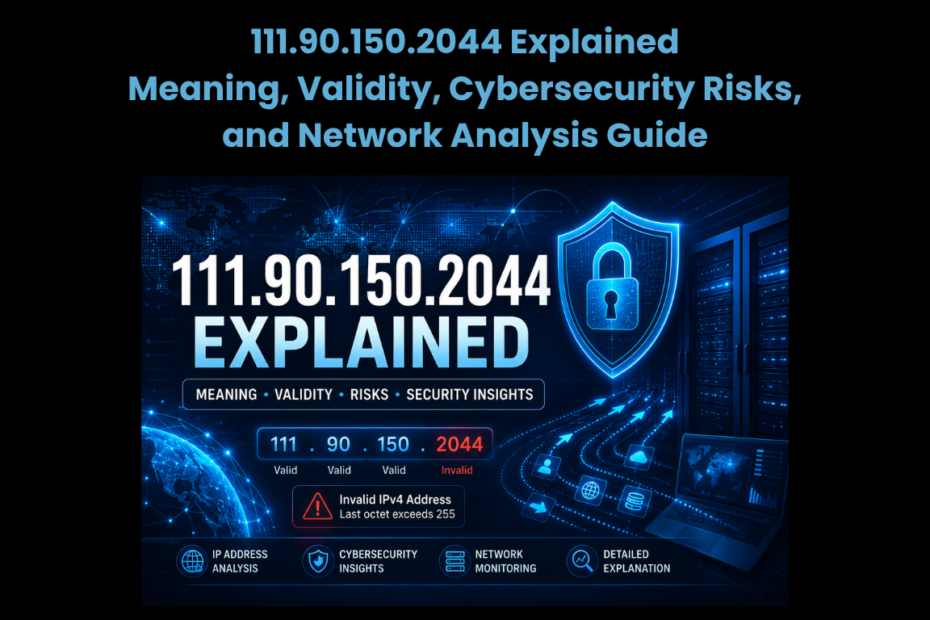
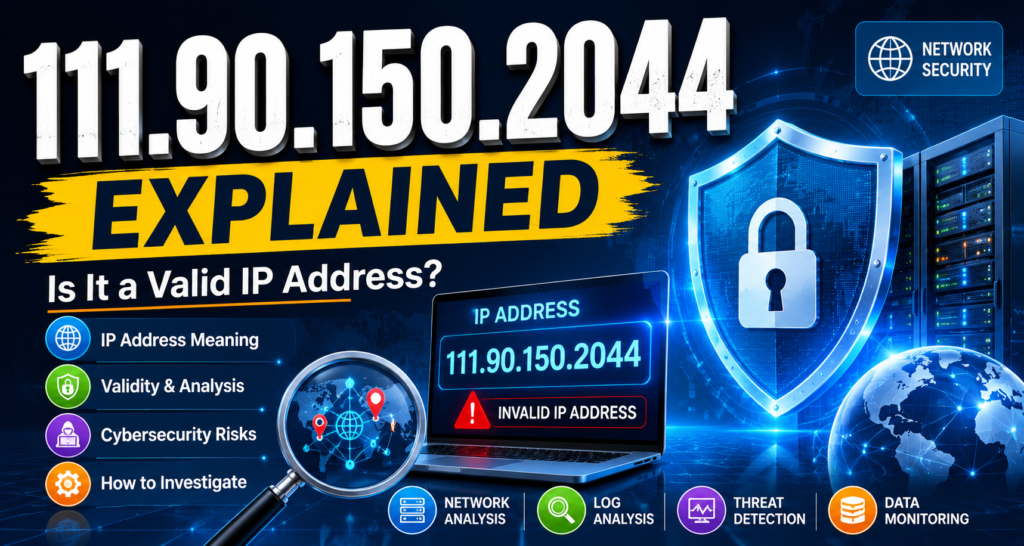
111.90.150.2044 Explained :- The keyword 111.90.150.2044 has gained attention because it looks like a legitimate internet protocol (IP) address. At first glance, many users assume it represents a website server, network device, or internet-connected system. However, a closer inspection reveals a significant issue that immediately raises questions among networking professionals.
IP addresses serve as digital identifiers that allow devices to communicate across networks. Every computer, smartphone, server, router, and connected device requires a valid address to send and receive data. Because internet infrastructure depends heavily on proper addressing standards, even a small formatting mistake can make an address invalid.
The interest surrounding 111.90.150.2044 stems from curiosity, confusion, and cybersecurity discussions. Users often encounter this string in search results, server logs, website analytics, technical forums, or suspicious network reports. Understanding what it means requires a basic understanding of how IP addressing works and why certain numerical values are accepted while others are not.
This guide explains the technical validity of 111.90.150.2044, its possible origins, cybersecurity considerations, and how network professionals analyze similar entries.

Understanding IPv4 Address Structure
How IPv4 Addresses Work
IPv4, or Internet Protocol Version 4, remains one of the most widely used addressing systems on the internet. An IPv4 address consists of four numerical segments separated by periods. These segments are known as octets.
A typical IPv4 address looks like this:
192.168.1.1
Each octet can contain a value ranging from 0 to 255. This limitation exists because each octet represents an 8-bit binary number. Since 8 bits can store values from 0 through 255, no valid IPv4 segment can exceed that range.
Every address must follow this structure:
XXX.XXX.XXX.XXX
Where each segment remains between:
0 – 255
This rule forms the foundation of IPv4 networking worldwide.
Valid IP Address Ranges
The table below illustrates examples of valid and invalid IP addresses.
| Address | Validity |
|---|---|
| 8.8.8.8 | Valid |
| 192.168.0.1 | Valid |
| 172.16.1.100 | Valid |
| 111.90.150.2044 | Invalid |
| 300.168.1.1 | Invalid |
| 192.168.1.999 | Invalid |
The problem with 111.90.150.2044 becomes obvious when examining the final segment.
Why 111.90.150.2044 Is Not a Valid IP Address
The address 111.90.150.2044 violates IPv4 standards because the last octet contains the value 2044.
Since IPv4 octets can only range from:
0 to 255The number 2044 exceeds the maximum allowable value by a significant margin.
Let’s break it down:
| Octet | Value | Valid? |
|---|---|---|
| First | 111 | Yes |
| Second | 90 | Yes |
| Third | 150 | Yes |
| Fourth | 2044 | No |
As a result, the entire address becomes invalid.
Networking equipment, routers, operating systems, DNS services, and security tools would reject this address because it does not comply with internet addressing standards.
This means that 111.90.150.2044 cannot function as a legitimate IPv4 address on the public internet.
Common Reasons This Address Appears Online
Even though the address is technically invalid, there are several reasons why users encounter it online.
Typographical Errors
One of the most common explanations is simple human error.
Someone may have intended to write:
- 111.90.150.204
- 111.90.150.44
- 111.90.150.24
During manual entry, additional digits, missing periods, or mistaken characters can easily be appended or altered, resulting in invalid formats such as:
-
111.190150.204— Created when period separators are accidentally skipped between octets. -
111.90.150.288— A digit typo that pushes the octet past the valid 255 limit. -
111.90.l50.204— A character substitution error where a lowercase letter “l” replaces the number “1”. -
111.90.1502and111.90.1502.— Truncated strings where dots or octets were entered incompletely.
Network administrators frequently encounter malformed addresses caused by typing mistakes, spreadsheet formatting issues, or copied log entries.
Log File Entries
Another possibility involves application logs.
Software systems often collect:
- User input
- Device identifiers
- Session information
- Server requests
If an application lacks proper validation, incorrect values may enter databases and logs. Over time, these values appear in monitoring reports and search engine indexes.
This frequently explains why unusual IP-like strings become searchable keywords.
Placeholder Values
Developers sometimes use fake addresses during testing.
Examples include:
0.0.0.0
127.0.0.1
255.255.255.255
Occasionally, invalid values are inserted temporarily to test validation systems or error handling procedures. Such entries can accidentally become visible in public documentation.
Cybersecurity Implications
When security teams encounter unusual network identifiers, they rarely ignore them.
Invalid addresses can reveal useful information about system activity.
Security Log Analysis
Cybersecurity analysts continuously review:
- Firewall logs
- Web server logs
- SIEM platforms
- IDS/IPS alerts
- Cloud monitoring systems
An invalid IP entry may indicate:
- User input manipulation
- Software bugs
- Logging errors
- Malformed requests
- Automated scanning attempts
Each possibility deserves investigation.
Ignoring unusual entries may allow legitimate security issues to remain unnoticed.
Suspicious Traffic Investigation
Threat actors often send malformed requests to determine how applications respond.
Examples include:
- Invalid URLs
- Corrupted headers
- Malformed IP values
- Unexpected payloads
These techniques help attackers identify weaknesses.
If 111.90.150.2044 appears repeatedly in logs, analysts should determine:
- Where the value originated
- Which system recorded it
- Whether it represents user input
- Whether it triggered an application error
Context determines whether the entry is harmless or potentially suspicious.
How Network Administrators Analyze Strange IP Addresses
Professional administrators follow a systematic approach.
Step 1: Verify Syntax
The first step involves confirming whether the address follows IPv4 standards.
111.90.150.2044 fails immediately because the final octet exceeds 255.
Step 2: Review Source Logs
Analysts then locate:
- Firewall records
- Server logs
- Application logs
- Authentication systems
These records reveal how the value entered the environment.
Step 3: Check User Activity
If the address came from user input, analysts investigate:
- Forms
- API requests
- Search fields
- Registration pages
Improper validation often allows invalid data to enter systems.
Step 4: Identify Patterns
Repeated appearances may indicate:
- Automated bots
- Security scanners
- Faulty applications
- Data corruption
Pattern analysis provides valuable context.
Tools for Investigating IP Addresses
Several tools help professionals analyze network information.
| Tool | Purpose |
|---|---|
| Wireshark | Packet analysis |
| Nmap | Network discovery |
| Splunk | Log analysis |
| Graylog | Centralized logging |
| ELK Stack | Security monitoring |
| Cloudflare Radar | Internet traffic insights |
While these tools cannot validate 111.90.150.2044 as a real IP address, they can help determine where such entries originate.
Differences Between IP Addresses and Ports
Many users confuse IP addresses and port numbers.
An IP address identifies a device.
A port identifies a service running on that device.
Example:
192.168.1.10:443Here:
- IP = 192.168.1.10
- Port = 443
Some users mistakenly assume 2044 may be a port number attached to the IP.
If written correctly, it would appear as:
111.90.150.20:44or
111.90.150.20:2044This formatting distinction is important when troubleshooting network issues.
Could 111.90.150.2044 Be Malicious?
The string itself is not inherently malicious.
However, its presence may indicate:
- Invalid user input
- Misconfigured software
- Automated scanning activity
- Data corruption
- Security testing
Cybersecurity professionals avoid making assumptions.
Instead, they focus on evidence.
A single appearance may be harmless.
Repeated appearances associated with suspicious activity deserve further analysis.
The safest approach involves reviewing the surrounding logs and system behavior.
Best Practices for Network Security
Organizations should implement several safeguards.
Input Validation
Applications should reject invalid IP addresses before storage.
Log Monitoring
Security teams should regularly review unusual entries.
Access Controls
Sensitive systems should enforce strict authentication requirements.
Automated Alerts
Monitoring tools should flag malformed network values.
Security Audits
Periodic audits help identify validation weaknesses before attackers do.
These practices improve both security and operational reliability.
Expert Insights
Network engineers generally agree on one principle:
Invalid data should never be trusted.
Whether the value originates from a typo, software bug, or malicious actor, organizations benefit from understanding why it appeared.
Industry best practices emphasize:
- Validation
- Logging
- Monitoring
- Investigation
These controls form the backbone of modern cybersecurity programs.
When organizations consistently apply these principles, unusual entries such as 111.90.150.2044 become opportunities to improve system resilience rather than sources of confusion.
How We Researched This Article
This article was developed using:
- IPv4 networking standards
- Internet protocol documentation
- Network administration best practices
- Cybersecurity monitoring methodologies
- Publicly available networking references
- Industry-standard security workflows
Where direct information about 111.90.150.2044 was unavailable, conclusions were based solely on established networking standards and verifiable technical principles.
Read More: 111.90.150.2044: Is It a Real IP Address or a Security Threat?
Conclusion
The keyword 111.90.150.2044 attracts attention because it resembles a valid IPv4 address while actually violating core internet addressing rules. The final octet exceeds the maximum allowed value of 255, making the address technically invalid.
Although it cannot function as a legitimate public IP address, its appearance in logs, reports, or search results can still provide valuable clues about software behavior, user input validation, data integrity, and cybersecurity monitoring practices.
For IT professionals, network administrators, and security analysts, understanding why invalid addresses appear is often just as important as understanding valid ones. Proper investigation, validation, and monitoring ensure that unusual entries contribute to stronger, more secure systems.
Frequently Asked Questions
1. Is 111.90.150.2044 a real IP address?
No. It is not a valid IPv4 address because the last octet, 2044, exceeds the maximum allowable value of 255.
2. Why does 111.90.150.2044 appear in search results?
It may appear due to logging errors, user input mistakes, automated system entries, or discussions related to networking and cybersecurity.
3. Can I ping 111.90.150.2044?
No. Networking tools will reject the address because it does not conform to IPv4 standards.
4. Could 111.90.150.2044 indicate a cyberattack?
Not necessarily. It could result from a typo, software issue, or malformed request. Additional context is required before drawing conclusions.
5. How can I verify whether an IP address is valid?
Check that it contains four octets separated by periods and that each octet falls within the range of 0 to 255.